Report · Dubai Online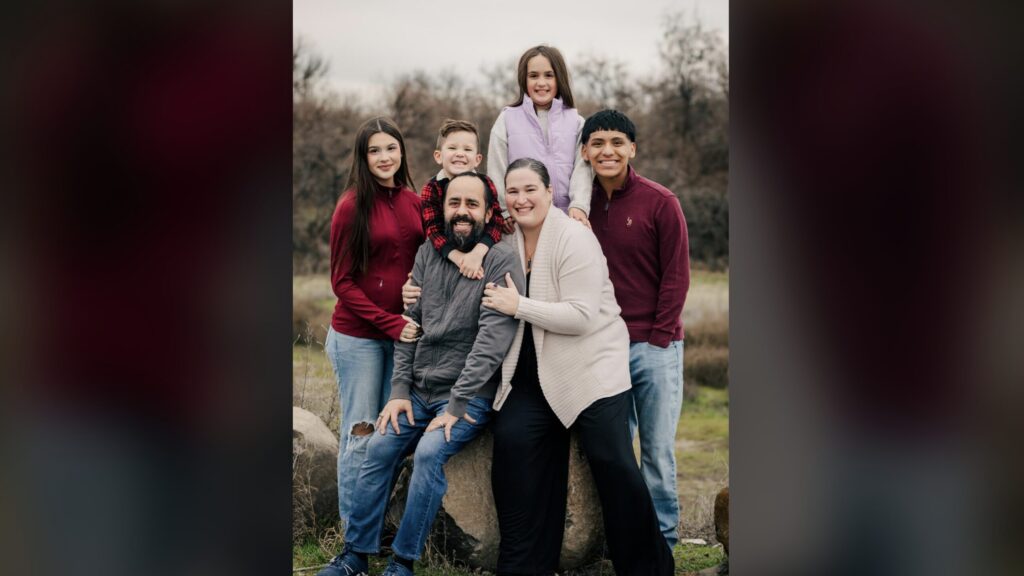
When the Food and Drug Administration approved a new pancreatic cancer drug called Rasonque last month, researchers and patient advocates celebrated. Kelsey Solano felt a pit in her stomach. “Only because the expanded access program immediately closed,” Solano recalled. That program, run by the drug’s maker, Revolution Medicines, had been set up to provide access to the drug before it had been approved by regulators. It was also how Solano, a critical care nurse in Washington state, hoped to get access for her husband Juan, who has metastatic pancreatic cancer. Solano was in the process of going through that program. Then, the approval came through. For her and other families who had already been counting on expanded access, getting the drug, which has been shown to nearly double median overall survival for patients, quickly has become far more difficult.
Approvals, of course, generally improve access to drugs that previously were only available on limited programs or in clinical trials. But for patients who are in the process of getting expanded access — often called compassionate use — they can turn what is meant to be a straightforward process into a labyrinth. The problem, Solano and cancer experts told STAT, is that regulatory approvals trigger the closure of early access programs, but commercial insurance coverage often isn’t available for weeks or months as payers work through the technical steps required to begin covering a new medication. That’s time that Solano, and many cancer patients, simply don’t have. That’s especially true in the case of pancreatic cancer, one of the deadliest and most aggressive cancer types.
Juan Solano was diagnosed with stage 3 pancreatic cancer in January 2025. The tumor was located in the body of the pancreas, requiring a complex surgery called an Appleby Procedure. Surgery is often pancreatic cancer patients’ best option, if it can be done, and his medical team was able to excise the cancer. “Got through it. Ended up doing really well. Finished off FOLFIRINOX,” Kelsey Solano said, referring to a chemotherapy regimen often used as frontline treatment for pancreatic cancer. “We thought he was disease-free back in November of 2025. In under two months, we were back with stage 4.” Juan went back into treatment and started a clinical trial at the Fred Hutchinson Cancer Center in Seattle, nearly four hours from Pasco, Wash., where the couple lives. The trial, testing an experimental drug from BridgeBio Oncology Therapeutics, slowed the cancer, Kelsey Solano said, but eventually it still progressed. The tumors, which had invaded her husband’s liver, bile duct, and peritoneum, ultimately expanded considerably. At the end of last month, as Juan rolled off the trial, it seemed like availability for Rasonque had come just in time. Kelsey Solano had seen the drug’s incredible results. “Some true hope,” she said. It was the sole major breakthrough in pancreatic cancer in more than four decades. She and her husband were in the middle of finishing paperwork to join Revolution’s early access program for the drug. Juan just needed to get a blood transfusion to meet some of the clinical requirements. “He was considered an urgent request because his clinical status was really starting to change,” Kelsey Solano said. “We were at the hospital getting the transfusion, and FDA approval happened. I knew this was going to be problematic.”
Because she had to get the drug through a commercial pathway, she immediately reached out to her insurance provider, Aetna, as well as Juan’s medical teams and pharmacies for help. “It was a gut-wrenching process of phone calls and hurdles. Sixty-one phone calls in 48 hours,” she told STAT. “Trying to figure out what needs to happen, and who do I need to talk to, figure out a pathway that my husband can get the medicine [through].” Revolution Medicines has a support program, called (ON)PATH, to help patients during the transition to commercial access after approval, said Anthony Mancini, the company’s chief global commercialization officer. It also was designed to help patients get free access to the drug if they are uninsured or underinsured, and to help patients who might be running into other barriers. But when Kelsey Solano called to ask about getting access to Rasonque through the program, she was told it was only available if she had a prior authorization request pending through an insurer. Aetna had told her it couldn’t create such a request, because the drug had not yet been added to its system. Solano said that everyone she spoke with tried to help her. They just couldn’t. The system didn’t leave them with an option. “While the medication is FDA approved, FDA approval does not guarantee coverage under a member’s insurance plan,” said an email Aetna sent to Solano. “Reviews are generally conducted on a regular basis and may take several months before a newly approved drug is added to coverage. At this time, we do not have an estimated timeframe for when this medication will be reviewed for coverage.”
The list price for Rasonque, also called daraxonrasib, is nearly $40,000 a month, too much for her to pay all at once. She called her bank to raise her credit limit. “The person was like, are you being scammed? We just want to make sure this is legitimate. I was like, ‘yes,’” she said. Her 8-year-old daughter had started a nonprofit and raised over $1,300 for pancreatic cancer research. She’d asked Solano if they could use the money to help pay for Rasonque. “It was hard to explain why I couldn’t just take that money,” Solano said. “I was like, we are a legitimate nonprofit, and we have a board, and we cannot give the money to Dad.” CVS Health, which owns Aetna, told STAT in an email that an external committee “will review daraxonrasib for formal formulary inclusion. Until that happens, eligible patients can apply for coverage through our formulary exceptions process.” A CVS Health representative told STAT that the company has been approving coverage for the treatment within hours of receiving all the necessary documentation from members’ physicians, and added that the company was unable to comment on any specific member’s case without a signed privacy waiver. Revolution’s Mancini said (ON)PATH does have a pathway to help patients who are in this situation. “What we made (ON)PATH to do is a comprehensive patient services program. We have both office-based staff and field-based staff to help with this. Nurses, health care providers, and office staff to help patients navigate the launch period as smoothly as possible,” Mancini said. “The last thing we want is to see a patient navigating this. We look to ensure the patient doesn’t have a treatment interruption.”
It’s common for patients to have difficulty accessing oncology drugs immediately after their launch, multiple experts told STAT. After approval, a national drug code must get assigned to the new drug and uploaded to drug databases. Those updated drug databases then are taken in by payer and pharmacy systems so that payers can make a decision on whether to cover the drug and claims can begin processing. All of that can take time, sometimes several weeks. “It’s logical that there’s some process in place that after a drug is approved, insurance companies need time to review it and figure it out. Intellectually, I do understand that. But in a case where a disease is deadly and a drug shows promise, that time period should be expedited,” PanCAN’s Fleshman said. Fleshman said cancer advocates and policymakers need to figure out how to address this gap. “There’s a lot of policy work to be done to make sure that this process goes smoother for patients,” she said. Massive Bio’s Loaiza-Bonilla believes payers should have been better prepared in the case of Rasonque. He noted that, in June, long before the drug was approved, clinical trial data presented at the annual meeting of the American Society of Clinical Oncology earned it nationwide headlines. “When they saw the standing ovation at the plenary in ASCO in June, they should’ve said, well this is going to be approved, we should have this in the system already,” he said. “Patients are on the line. There should be a mandatory number of days before they update the system and have it available.”
Kelsey Solano received seven blue Rasonque pills last Tuesday for the price of $9,286.67. Juan had been off treatment for about a week. A GoFundMe page was also recently updated to ask for help for the purchase. After STAT spoke with Revolution Medicines and Solano asked that review of her case be escalated, she received a call from an (ON)PATH representative informing her that an executive board had reviewed her case, and that her husband can receive a 30-day supply of Rasonque from the manufacturer. Aetna also contacted Solano and told her that her plan would cover the drug for one year. “I’m kind of in shock,” Solano told STAT after the calls. The first couple of days Juan was on Rasonque, Kelsey Solano told STAT that there wasn’t much change in his condition. On the third day, the pain that he’d been feeling for the last year and a half — he ranked it a six on a scale of one to 10 — suddenly vanished. “I called the palliative care team and said my concern is he’s been on a lot of pain meds for the last year and a half, I’m afraid he’ll withdraw,” she said. “He’s telling me, ‘I have no pain.’ Which is so wild.” But over the weekend, Juan was back in the hospital. “He has a portal vein clot and hepatic encephalopathy,” Solano told STAT. That’s a life-threatening complication involving the liver. Rasonque is their last hope, she said. “Either [it] works and helps or he isn’t going to make it.” She’d been hoping that the medication will buy him not only more time, but also quality of life if it works and he pulls through. “And have a little bit more of him. Get him back a little bit. He’s a triathlete. Or he was. Used to bike, mountain bike, and had more energy than anyone in the household,” she said. “I know it’s not a cure, but a median survival of 13.2 months. That is a lot of meaningful time.
Source: STAT